Is Your File Transfer Strategy Ready for the Next Audit?
How audit-ready file transfer depends on verified identities, controlled access, protected transfers, clear evidence, and governance that can be proven months later.
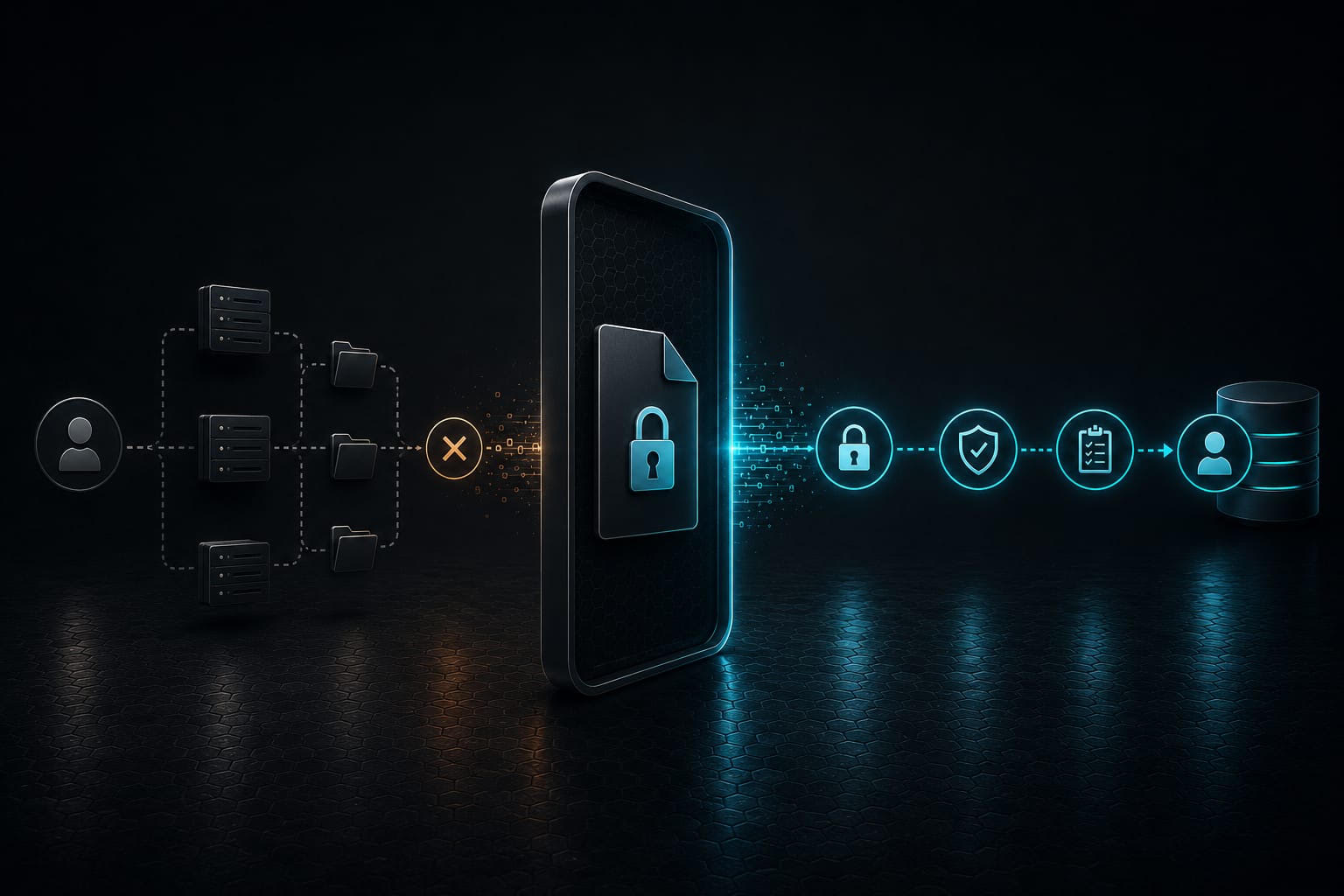
The file arrived safely. That may be the easiest question your next audit asks.
The harder questions come next:
Who was allowed to send it?
Who received it?
What did it contain?
How was it protected?
And can you prove what happened months later?
Those questions turn file transfer from a technical task into a governance issue.
Regulations and standards such as ISO 27001, NIS2, GDPR and DORA create expectations around access control, security, accountability, risk management and evidence. They don’t prescribe a particular file-transfer system.
DORA provides a useful example of how specific those expectations can become. It requires financial entities to protect data in transit and limit access to information and ICT assets to legitimate and approved functions.
File transfer is one of the areas where those requirements become operational and can be tested.
Who Is Actually Allowed to Send the File - and Who Is Really Receiving It?
An auditor may start with a simple question: which account was allowed to send the file?
Does that account reach exactly the partner folder it needs, or can it access other destinations that have remained outside regular review?
A finance employee’s credentials can remain active after the original project has ended. A partner connection can remain configured after the business relationship changes.
We saw a real example of this in practice.
A former employee still had access to specific systems after leaving the organization. The access had never been formally removed.
That created a clear governance gap: a permission remained active after the business reason for it had ended.
The connection itself provided another layer of protection. Each transfer still required the connection to authenticate against the specific destination rather than relying solely on the existing permission record.
The access existed in the system.
The transfer still had to prove where it was allowed to connect.
That distinction matters in a Zero Trust approach: access is continuously evaluated against the identity, connection and required destination rather than being treated as permanent trust.
The receiving side matters just as much.
Is the partner actually the identity the system expects?
A connection based on an email address or shared credential provides limited assurance about the receiving party.
A connection that verifies a specific key or certificate against a specific partner provides a stronger basis for trust.
Do You Know What’s Actually Inside the File?
Before an auditor asks how data was protected, they need to establish what data was being handled.
A scheduled export may have started as a simple order-confirmation file. Over time, additional fields can appear - a phone number here, a payment reference there - until the current contents become difficult to describe precisely.
That makes data classification and access decisions harder.
“We encrypt everything” is only part of the answer when the contents of those files have changed over time.
Knowing what moves between systems is part of controlling the transfer.
Is the Protection Enforced During the Transfer?
This is where encryption in transit, secure protocols and authenticated connections become relevant.
The important question is how consistently those controls are enforced.
Is the certificate still valid?
Are keys managed and rotated according to policy?
Will the connection stop when its security configuration falls below the required standard?
A transfer process that continues with weaker protection creates a governance problem. A controlled system should make a security deviation visible and, where appropriate, prevent the transfer from proceeding.
DORA specifically addresses the security of data-transfer methods and access rights within financial entities.
Can You Prove What Happened Months Later?
This is where the previous questions come together.
Imagine a compliance officer during an audit asking:
Who sent this specific file, to which partner, when was it sent, and what happened to the transfer?
In some environments, answering that question means searching through logs across several systems and checking whether the relevant records are still available.
In others, the answer is a lookup because every transfer already created a structured record.
That record should show the essential facts: who initiated the transfer, which partner received it, when it happened, whether it succeeded, and which security controls applied.
The same principle applies to access.
When an employee changes teams or a partner relationship ends, does someone review and remove the corresponding access?
A transfer log can provide a clear history of file movements while access governance follows a separate process. An audit needs visibility into both.
DORA also requires financial entities to maintain processes for recording, tracking, logging, categorising and following up on ICT-related incidents.
So: Is Your File Transfer Strategy Ready for the Next Audit?
Audit readiness comes down to evidence that is available when someone asks for it.
For one specific file, can your team quickly answer:
- Who sent it?
- Who received it?
- What did it contain?
- How was it protected?
- And was the access still appropriate?
Xferity is designed to make those answers part of the transfer process itself: partner identity is explicitly verified, encryption is enforced, access can be controlled per connection, and every transfer creates an auditable record.
The goal is a file-transfer process that is controlled, traceable and provable months later.
The next audit may start by asking whether the file arrived.
Be ready for the questions that come after that.